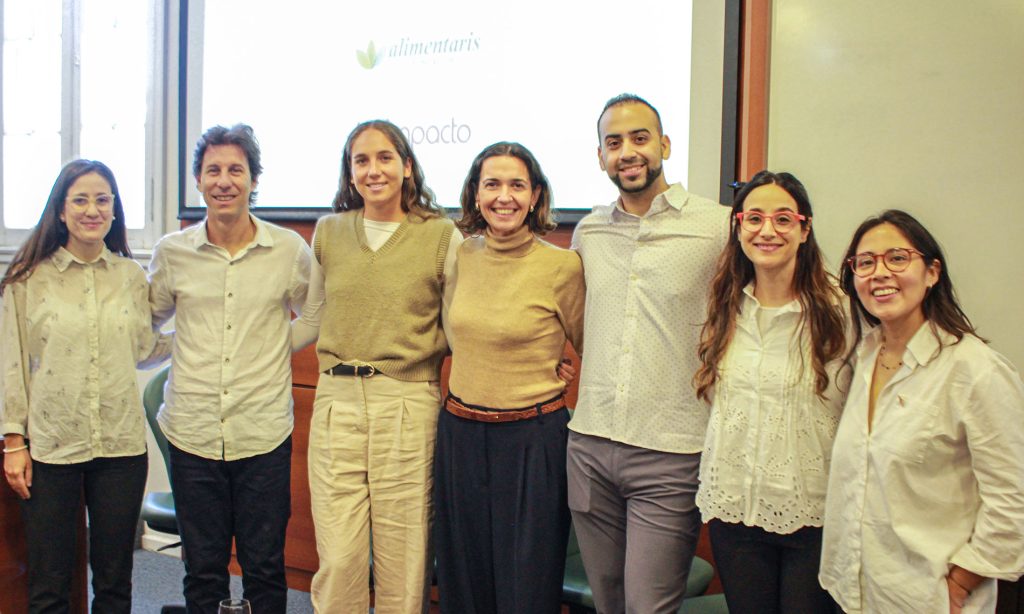
A mapping effort by Universidad Austral and Fundación Alimentaris on impact investing—capital seeking financial return while also generating measurable social and/or environmental outcomes—shows that between 2023 and 2024, USD 41.6 million was channeled outside the traditional banking system and capital markets. These resources were deployed by 22 investors toward 89 organizations, in a period also marked by the development of SVS Bonds and sustainable credit instruments.
Access the full study (Spanish only)
Buenos Aires, November 5, 2025 — Between 2023 and 2024, 214 investments totaling USD 41.6 million were executed outside banks and capital markets, involving 22 investors and 89 recipient organizations. The data comes from the “2023/2024 Impact Investment Mapping in Argentina,” produced by Universidad Austral and Fundación Alimentaris, who—beyond quantifying the phenomenon—compiled a directory of nearly 140 actors driving impact investment in the country, available for download here.
The period also shows activity in BYMA’s Social, Green, and Sustainable (SVS) Bond panel, with a slowdown in volume and number of issuances, compared with the upward trend seen since 2019. Between 2023 and 2024, there were 40 issuances totaling USD 1.132 billion, with a predominance of energy projects (wind and solar). Green bonds accounted for 75% of issuances and 93% of the amount. Twenty-one issuers—public and private—participated, with Genneia standing out with 8 bonds and nearly USD 300 million.
Investor demand for SVS instruments remains strong: over the last four years, it has significantly exceeded supply, and in 2023–2024 the gap remained above 40%, signaling unmet appetite for sustainable finance.
On the banking side, sustainability reports from 12 institutions show 121,849 social, green, and/or sustainable loans totaling USD 3.2 billion during the period, in addition to identified mutual funds and trusts.
The study clarifies the scope of “impact investment”: investments with an explicit intention to generate positive, measurable social and/or environmental impact, along with financial returns. The database was built from 42 survey responses (from both supply and demand), interviews with 28 ecosystem actors, public data verification, and specific analysis of the SVS bond panel and banking sustainability reports.
“From the School of Business Administration, our aim is to strengthen Argentina’s impact investment ecosystem with reliable, comparable, and decision-useful information. This mapping consolidates a long-term effort to systematically measure these types of investments, which are essential for building more inclusive and sustainable markets in Argentina,” said Fernanda Figueroa, co-director of the mapping project and professor and researcher at the Center for Studies in Sustainability and Social Innovation (CESIS).
“From Fundación Alimentaris, we work to strengthen the impact investment ecosystem in the country. This mapping allows us to understand experiences, how resources are being mobilized toward initiatives that combine financial return with social and environmental impact, and opens the door for more actors to join this transformation and help consolidate an increasingly solid market in Argentina,” added Eugenia Concina, Director of Prosperity Programs at Fundación Alimentaris.
Overall, the report records USD 4.373 billion in sustainable financing during the two-year period (debt, equity, and quasi-equity), representing 14% of impact investment in Latin America.